Security patrol basic security guard training.

Basic Security Guard Training – Unit 5, Lesson (C)


What Is Security Patrol and Why Does It Matter

A security patrol is one of the most important tasks for a security guard. Instead of remaining in one place, patrolling allows guards to move through designated areas, observe surroundings, and prevent potential issues. This visibility discourages criminal behavior and enhances safety.

If you’re wondering what is patrolling in security, it refers to the guard’s movement and inspection duties to ensure the safety of people, property, and information.

Staying in a fixed post limits your view, but regular patrols allow you to cover more ground and detect threats early.

Importance of Security Patrol

The main purpose of a security patrol is to maintain security and identify anything unusual within the area under your responsibility.

If you ask, “what is security patrol,” it’s the active process of preventing incidents before they happen. Patrolling helps guards become more aware of changes in their environment and respond accordingly.

Responsibilities During Patrol

When conducting a security patrol, always be alert to the following:

  • Housekeeping hazards like garbage piles or blocked exits
  • Maintenance issues such as leaks, burnt lights, or faulty equipment
  • Emergencies like fires, flooding, or snow damage
  • Intrusions, theft, vandalism, or unauthorized access
  • Faulty machinery, including cooling/heating systems
  • Damaged property or broken infrastructure
  • Unauthorized personnel in restricted areas
  • Unusual sounds, odors, or signs of tampering

Recording all unusual observations and reporting them immediately is a key part of your responsibility.

Types of Security Patrol

Understanding the five major types of security patrol helps you adapt to different situations:

  1. Reactive Patrol – Conducted after an incident has already occurred
  2. Proactive Patrol – Carried out to prevent potential issues
  3. Control Area Patrol – Follows post orders to dominate specific zones
  4. Random Patrol – Done at unpredictable times and routes
  5. Directed Patrol – Assigned by a supervisor or control room for a specific reason

These types of patrols help define the answer to what is patrolling in security by showing how different methods address different risks.

Common Patrol Methods

Depending on the site and situation, patrolling may include:

  • Foot patrol
  • Bicycle patrol
  • Vehicle patrol
  • Visual surveillance using CCTV or mirrors

Each method enhances site coverage and response time.

Senses to Use While Patrolling

Stay alert and make use of all five senses during a security patrol:

  • Sight – Scan for anything unusual or out of place
  • Hearing – Notice unexpected sounds like alarms or running water
  • Smell – Detect smoke, chemicals, or gas leaks
  • Touch – Feel changes in temperature or air currents
  • Taste – Only used with caution, in rare safety-related cases

Checklist for Patrol Inspections

Whether working during the day or night, follow these basic checks:

  • Turn off unnecessary equipment
  • Identify strange sounds or odors
  • Check for water leaks or running taps
  • Inspect all doors, windows, and entry points
  • Watch for damaged or tampered property
  • Use your flashlight properly
  • Be careful entering dark areas
  • Never smoke during patrols

Night patrols require extra attention since criminals often operate under low visibility, but this can also help you observe quietly and unnoticed.

Responding to Crime During Patrol

If you suspect a crime has occurred:

  • Immediately contact the police
  • Call for backup if other guards are nearby
  • Wait for authorities if alone—avoid taking unnecessary risks

Quick, calm, and correct responses are essential to maintaining control and safety.

Steps to Complete an Effective Patrol

  1. Before Patrol

  • Read and understand all post orders
  • Review site details and special instructions
  • Inspect all patrol equipment

2. During Patrol

  • Avoid using the same route every time
  • Use your senses actively to detect issues
  • Record everything—don’t rely on memory
  • Interact respectfully with those on-site and stay visible
  • Seek help if confronted
  • Walk quietly, especially at night
  • Avoid hazardous areas
  • Stay focused and sharp

3. After the Patrol

Completing a security patrol doesn’t end when the walk is over. After finishing your rounds:

  • Record Your Observations in a Notebook: Immediately note anything unusual you observed, like broken windows, lights left on, or suspicious individuals.
  • Write a Security Report: If you noticed anything that may require further attention or action (e.g., a safety hazard or attempted break-in), write a clear, concise report using the proper report format.
  • Log the Patrol Time and Route: Use the official patrol log or digital system to note when and where you patrolled. This record helps verify that you completed your duties.
  • Notify Your Supervisor: Inform your supervisor of any serious findings or events requiring follow-up.
  • Prepare for the Next Patrol: Charge flashlights, check radios, and restock any patrol gear to be ready for the next round.

Summary of Security Patrol Duties

To sum it up, what is a security patrol? It’s the practical act of observing, reporting, and preventing issues on your site.

  • Security patrol is the foundation of your role
  • Different types of patrols address different threats
  • Good preparation and consistent awareness are key
  • Never carry weapons unless authorized
  • Always be ready to respond to emergencies with a clear plan

Understanding what is patrolling in security will improve your effectiveness and protect the people and property you’re assigned to guard.

COMPLETE COURSE 30 LESSONS

How to conduct a protective search in Security?

Basic security guard training Unit 4 Lesson (B)


Security guards carry out a protective search on their site if the site policy is required. The protective search conducts in two situations;

  1. Search for the weapon and evidence after detaining the person.
  2. search the employees, visitors, vendors, and the public as well as their belongings when entering and exiting the premises.
There are four reasons for the search;
  • To keep essential things in
  • To keep potential problems out
  • To control access to an area
  • To know what is in a specific area

Your client hires you for keeping himself and his property safe from any problems. So, the security guards apply the access control policy for all people who want to enter the site.

A search is also part of the access control which allows only authorized people, vehicles, and material in and out of the site.

The protective search procedure may include in your post order if not, you should suggest the client and your supervisor.

Sometimes your client can be suspicious that the employees may steal the goods from the company.

For that reason, you may be asked to search for the employees’ bags and other belongings while leaving the company.

What things need to search on the site?
  1. Dangerous items
  2. stolen items
  3. prohibited items

The search can contemplate finding the above items either people in or out of the company.

If the people come in with dangerous items such as a weapon or other tools that can use a weapon. They may have the intention to hurt or injure someone already inside the premises.

Search for prohibited items for instance drugs, marijuana, and other items which are not allowed to carry with them.

Any goods stolen from the company also need to conduct a protective search.

Providing security permission you may require to search the people, packages, and vehicles in different kinds of investigation which are;

  1. Visual search ( search through your eyes)
  2. A request search ( you made a request for a search)
  3. Agreed search (someone came to you and asked for a search)
When do you search for a vehicle?
  1. Required by your post order
  2. When vehicles enter the site (to search for weapons/equipment)
  3. While vehicles are out from your site (to avoid theft)
Vehicle search tools;

You have to use the different types of equipment to search for a vehicle that is available on your worksite. But, here are the general tools that, you may utilize on searching for a vehicle in many places.

  1. Your eyes
  2. Flashlights
  3. X-ray
  4. mirror
  5. dog
When to search for people or packages?
  1. Required by your site order
  2. When a person enters an area and is carrying something that could conceal (hide)
  3. If a person leaves a high-security area
  4. When a person enters an area could be carrying something dangerous.

Remember, the most important tool for any kind of search is your EYES.

Tools to use search for persons or packages;
  1. Eyes
  2. Metal detector
  3. X-ray
  4. Hand search

When you conduct the protective search you shouldn’t do your own because it can be a violation of the person’s rights and you have to do hard to prove it in court.

When some people do not agree with you about searching for them or their personal belonging.

In that situation, you shouldn’t force them to do so, because you don’t have a right to compel someone for help. Explain to them why it is needed. and what you are going to search for.

In the first place, try to gain co-operation. Still, they don’t allow you then inform the supervisor or the client representative.

GAINING COOPERATION

  • Be polite and speak with authority: Talk to people first, don’t just take their bag from them and begin searching. Remember that your job does not be afraid to speak to someone.
  • Ask for Cooperation: Ask “do you mind if I search your bag?” rather than telling them they have to be.
  • Tell people why: People always want to know why?. You should tell them valid reason before they ask (company policy/special instruction by your client)
  • Find something prohibited: Don’t accuse people, be polite in telling someone that an item cannot be brought in.
  • Thank people for their cooperation
What personal property do you store for security purposes:
  1. Storing shopping bags: (in a retail shop): in order to prevent theft
  2. mobile phone: In the high-security area (provide a safe facility to keep)
  3. storing vehicles: park the vehicle in a secured area
  4. Storing identification: keep personal and return them when they are out.
IN SUMMARY
  • Searching is part of the role of providing protection
  • There are 4 main reasons to conduct a protective search
  • Searches are conducted for items that are dangerous, stolen, or prohibited
  • The vehicle is generally searched as required by site orders, when they enter a site, and when they leave a site
  • People and packages are generally searched as required by site orders.
  • People can carry something with them a stolen item when they leave a high-security area, and when they enter your duty place can bring something dangerous.
  • Know how to use search equipment available at your worksite
  • A person should only be searched as required by your site orders
  • If a person must be searched, it should only be done by someone of the same gender male-male or female-female
  • Always try and gain cooperation when conducting a protective search
  • You may be required to check identification at the same time as conducting a protective search
  • If you store personal property as a result of a protective investigation, always provide someone with a receipt for their property.
Complete course 30 lessons 

How do search bages?

Access control in a site basic security guard training

Basic security guard training Unit 4 Lesson (A)


What is access control in security guard? it is a method used to control and monitor the entry of people, vehicles, and goods to a specific site. It ensures that only authorized individuals are in the right place and at the right time.

The access control mechanism is used everywhere, including your house, car, and office. For example, you close doors, windows, and gates when leaving the house, lock your car after parking, and secure doors and windows after office hours. All these activities are performed to prevent unauthorized entry and ensure safety.

What is the Purpose of access control: 

There can be many reasons why the access control mechanism

  1. Controlling the flow of people – control and monitor the movement of people.
  2. Prevent unauthorized access – Ensures only authorized personnel can access specific locations.
  3. Manage vehicle flow – Controls the entry and exit of vehicles.
  4. Prevent unauthorized vehicles – Stop unauthorized vehicles from leaving or entering the premises.
  5. Monitor goods movement – Prevents unauthorized goods from entering or exiting the site.
  6. Create a secure environment – Enhances safety and security in the workplace.

Aim of the access control in Security:

Access control is a key duty of security guards. It aims to prevent unauthorized individuals, vehicles, and materials from accessing the property. By controlling the movement of people, vehicles, and goods in and out of the site, security guards ensure the safety and protection of the premises.

What is the level of access control for security guards?

The level of access control may vary depending on the site and what it needs to protect. But, in common, there are three categories of access control as following;

1. Minimum access control:

Minimum access control applies to areas where general permission is granted to everyone, such as shopping malls, public parks, bus stations, and railway stations. In these places, it is assumed that all individuals entering have a lawful purpose.

However, as a security guard, you must restrict access to anyone who violates the law or regulations to maintain order and safety.

2. Mediam access control :

Medium access control usually applies to residential buildings and offices. Security guards manage access by using intercom systems to verify visitors. They record visitor information, issue visitor passes, and record the person being visited along with the purpose of the visit in their log book.

Guards allow individuals to enter the premises only after having permission from the concerned person.

3. Maximum access control:

The maximum level of access control is found in sensitive sites, such as military bases, government offices, labs software manufacturers, etc. The access controls here combine both the security guard and alarm system.

Security guards are responsible for searching vehicles, baggage, and even individuals as required by the site’s security protocols.

Rules of Access Control:

Access control rules depend on the site’s specific requirements.

  1. Allow public access during specific times: Some areas allow the general public to enter at specific times and days. For example, people can access the lobby or waiting area during office hours, but security guards restrict entry after hours.
  2. Control parking area access: Security personnel manage access to parking areas, applying rules based on time and purpose.
  3. Update rules based on security needs: Top management reviews security matters and updates access control rules as needed.
  4. Restrict employee movement: In large organizations, employees cannot enter other departments unless they have a valid reason.
  5. Apply rules to everyone: Security guards enforce these rules for both employees and the public to maintain safety and order.

What does access control determine?

  1. Need of the clients:

The clients who do business with a company always are concerned about the safety of the products that they have bought, or that they have stored.

Sometimes the clients need different types of entry and egress mechanisms. The result for that the policy can be changed as per the client’s requirement.

2. The owner of the property:

The property owner may set all rules of the access control. He instructs the security guard who can access the building or area. And, what needs to search before entering and exiting the property.

ACCESS CONTROL IN ELEVATOR AND ESCALATOR

If you are working in a shopping mall or a residential building where the elevator or escalator facilities are available. You are responsible for supervising the elevator operation. Make sure the following things go well in the operation of the elevator.

  1. Notify the maximum load to the passengers.
  2. Encourage the passenger to move to the rear of the elevator and face to the front.
  3. Make sure the people’s clothing and personal belongings are away from the door on closer.
  4. Know the emergency system such as a stop button, bell, and telephone numbers.
METHOD OF ACCESS CONTROL IN A SITE.  
access control

Access Control Method:

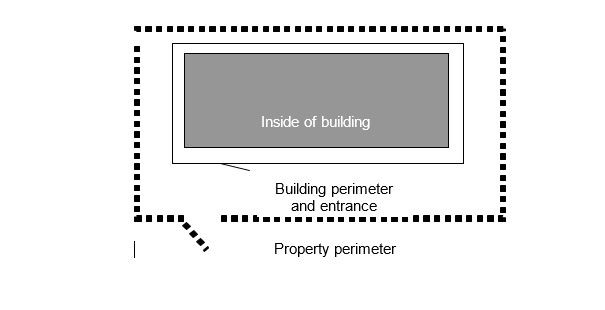
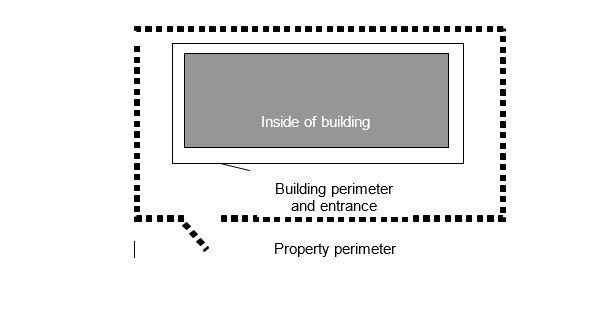
The access control method may vary depending on the site, but it generally follows three main layers: the outer perimeter, inner perimeter, and central core area.

  1. Outer Perimeter: This is the outer boundary of the property, such as fences, gates, or surrounding areas.
  2. Inner Perimeter: This includes the building’s walls, doors, and windows, which act as barriers to control entry.
  3. Central Core: This is the most secure interior part of the building or site, where sensitive operations or assets are located.

Controlling the movements of people 

Security guards control the movement of people across various parts of the site through three phases of defense:

  1. Perimeter
  2. Inner Circle:
  3. Center Core:

Security personnel must manage and monitor the movement of people at all three layers to ensure effective protection and prevent unauthorized access.

How to control access at the perimeter?

  1. Fences and walls
  2. Gates and other openings
  3. Infrared beam perimeter security systems
  4. Cameras
  5. Lighting

How to control access to the inner perimeter?

  1. Entry through the security guard
  2. Enter through the mechanical and electrical devices.

Entry through the security guard;

You may ask to do duty at the entrance of the building and be responsible for checking the personal identity and determining whether a person to allowed in or not. The following way you should allow the person to access the building.

  1. personal recognition:
    • (you know the person personally) is only useful for small businesses. Also, it applies in an area where the less movement of the people. Such as regular vendors, visitors, and employees who only come for work.
  2. ID system:
    • (check the person has a valid ID card) these are things you should make sure of while checking the ID.
      • a colored photo and physical description of the holder
      • the full name and signature of the holder
      • the company’s name and an issuing authority’s signature
      • an expiry date
      • A serial number and employee number
  3. Special passes:
    • In a high-security area, the person requires a special pass to access there. If the person is a temporary worker he needs a special pass from the security guard. He provides you driving license, national ID card, or any other government-issued identity, and you provide a special pass.
    • At the exiting time, you should return your ID and get back the special passes. You should record all the details in the logbook including entry/exit time and description of the work he has done.

Entry through the mechanical/electrical device;

It is used in the medium level of access where a security guard does not need to check everything about the employees. They can go in by using pre-approval electrical and mechanical cards, keys, and storage data.

    1. Keys
    2. Tough keypads
    3. ID card tags
    4. Proximity cards
    5. Biometric identification

Controlling the movements of vehicles

Controlling vehicle movement is as important as managing people on the site. As a security guard, you must take specific measures to enforce access control rules effectively. Your main responsibilities include:

  1. Allowing only authorized vehicles: Ensure that only vehicles with proper authorization can enter the site.
  2. Preventing unauthorized equipment and material removal: Check vehicles to stop unauthorized equipment or materials from being taken out of the premises.
  3. Maintaining a vehicle log: Record details of all vehicles entering and leaving the site to keep an accurate log for security purposes.

 Tools to use for vehicle control:

    • Gate
    • Barrier
    • Traffic cone
    • Sign and symbol

When controlling vehicle movement, ensure that only pre-approved vehicles enter the site. Employees must obtain approval from company management to bring their cars, and you must verify that the vehicle has the approved company label or sticker.

You should log vehicles in and out of the premises and register the driver’s details in the access control book. Additionally, check the vehicle’s size and height. If a vehicle exceeds the site’s size or height limits, immediately inform your supervisor.

Your task on controlling the delivery vehicle

  1. check vehicle license numbers and driver’s name
  2. Only the proper authorized delivery is given and received
  3. receive the delivery by post orders
  4. Check the vehicle is sealed and that the “seal” is not broken or tempered.
  5. Verify the vehicle when leaving the premises to make sure it has loaded only authorized items and has waybills and any other supporting documents.
  6. Check the vehicle cabs to discover the prohibited items that may be concealed.

3. Controlling the movement of the material 

Controlling the material access is the most sensitive task a security guard performs on duty. In the course of your duty, you may deal with the illegal removal of the material from your site either through the employees or the service vendor.

Routinely employees leave the site with things like a laptop, computer, computer parts, full briefcase with goods, or the vehicle.

As your part of the duty, you should allow only the legitimate material in and out of the premises. If you find anything without approval taken out, then ask for the gate pass from the responsible person.

There is no doubt in today’s world, industrial espionage is increasing day by day. Hence, the security guard has to prevent accessing sensitive material and removing it from the company.

Shipping and receiving controls

In some instances, the client may ask the security guard to sign some documents for shipping and receiving the goods. The clear client’s instruction requires or your post order includes these tasks to do on your duty.

You should comply with the client’s wishes when you control the movement of the material. You may be required to do, as follows, with the shipping and receiving items.

  • Fill out the special form for the receiving packages if available.
  • complete the logbook of the shipping and receiving of goods
  • Delivery sign-out and sign-in
  • Make arrangements for the delivery and recipient of goods.

Summary:

  1. What is access control in security guard? Access control is a security measure for managing the movement of people, vehicles, and materials when in and out of the site.
  2.  There are many reasons why access is controlled and it can be controlled by
      • Physical systems (such as barriers, gates and doors, etc.)
      • The man guarding (security guard controls the movement) or
      • Combination of both
  3. Guard should be familiar with their site policies regarding access and be aware of their response to common access control situations
  4. The 2 basic requirements of personnel access are
      • Determining to identify and
      • Determining the level of access.
  5. Identification shown to you by a visitor/co-rep may not necessarily be in the form of an ID card.
  6. Guards may be required to make sure there is a sign-in/sign-out log at their site
  7. In handling unauthorized access, guards should make sure that they know their site policies and remain policy at all times.
  8. There are 3 main responsibilities in controlling vehicle access:
      • Only authorized vehicles are permitted
      • Unauthorized equipment and material removal
      • and maintain a log of a vehicle entering and leaving
  9. The guard should be aware of the approved vehicle at their site
  10. The guard should be aware of the height and size limitations of a vehicle access point
  11. Ensure that vehicle access points are clear for approaching emergency vehicles.
Take the full course

Integrity is an important quality of security guard

Basic security guard training Unit 1 Lesson (G)


Integrity is the most important quality a professional security guard can possess. It is an internal guideline that guides how you react positively to the outside world. A person who possesses integrity is respectful, reliable, honest, and principled.

Key Elements of Integrity

The most important elements of integrity as follows influence your daily duties and how you interact with others.

  1. Respectful
  2. Reliable
  3. Honest
  4. Principled

When are you respectful:

When you exercise the following four points on your duty. It brings positive responses and respect from co-workers, employers, and the general public.

  1. Like yourself and treat yourself well: being respectful of yourself and your job influences how you carry yourself and how others perceive you.
  2. Treat others as you would treat yourself: Show courtesy, kindness, and helpfulness to build positive relationships.
  3. Understand the importance of following laws and orders: Adhere to official rules and regulations it demonstrates professional conduct.
  4. Respect the property of others: Protecting and caring for the belongings of others is a key part of security work.

When are you Reliable:

A security guard holds one of the most trusted positions in any organization. You are responsible for protecting valuable property, VIPs, and sensitive information. To be seen as reliable, you should:

  1. Perform your duties to the best of your ability: Always do your job to the highest standard.
  2. Take control of situations and stay calm in emergencies: Responding appropriately under pressure builds trust and confidence.
  3. Be punctual when arriving and leaving: Reliability includes respecting time commitments.
  4. Share information with guards on other shifts: Good communication ensures continuous and consistent security coverage.

When you are honest:

Honesty is another crucial quality for a security guard. If you are honest, everyone believes in you and expects positive outcomes from your actions. You show honesty by:

  1. Telling the truth: Always tell the truth because untrustiness undermines professional relationships.
  2. Taking responsibility for your actions instead of blaming others: Be accountable for what you have done it is essential for personal and organizational integrity.
  3. Keeping information to yourself when necessary: maintain confidential information rather than leakage.
  4. Being sincere with others: When you interact genuinely fosters respect.

When you are principled?

If You are a principled person you have a moral of speaking about the right and wrong with either junior or senior position in an organization. These things show you are principled;

  1. You believe in treating everyone fairly
  1. You speak out if you see someone being treated unfairly.

Additionally, a professional security guard also has self-control and discipline. Some people may criticize you because of your uniform which represents authority.

If you are angry at that point the situation would go worse beyond the horizon. So, you should stay calm in an emergency that’s the reason the other people who are frightened turn to your guidance.

If you are disciplined.

1.  Show strong self-control, even when challenged

  1. Remain calm under stress

  2. Follow procedures with little or no supervision

  3. You are well-organized a carry out your duties with care

  4. Do not become involved in any gossip in your workplace

6. Enforce the rules and procedures at your site no matter who is involved


ACCEPTING FAVORS

“Accepting favor or a security courtesy” means a security guard obtains something from a third party free of charge.

Someone or businesses out of your company can offer you gifts, money, food, goods, or other property for partisan services.

Consequences of Accepting Favour

  • Harms your decision-making ability:
    • Accepting anything from a third party will damage the security guard’s decision-making ability when it comes to the individual or business from whom they had received the gift or any other things.
  • May compromise your impartiality and create bias:
    • This can make it very difficult for the security guard to act with impartiality without the favor of someone or bias.
  • Damages public trust in the security industry:
    • Cause of that public trust and support toward the entire security industry can be affected in general.
  • Reflects poorly on you, and your colleagues:
    • A wrong decision not only blames the particular security officer but also your fellow officer, your company, and the whole security industry in the eyes of the public.

Hence, stay away from these types of activities in your workplace which can cause the damaging reputation of the security industry as a whole.

Summary

A security guard demonstrates integrity by doing the following:

  1. Obeying all work-site rules and regulations.
  2. Respecting all laws (federal and provincial/state).
  3. Being reliable, punctual, and professional at all times.
  4. Carrying out all duties in a professional manner.
  5. Completing assigned tasks on time.

Upholding these standards will help ensure you represent yourself, your employer, and the security profession with dignity and professionalism

The full course of security guard training

Security Guard Use of Force – Guidelines and Responsible Practice

Basic security guard training Unit 3 Lesson (D)


The security guard use of force refers to the actions taken by a security or law enforcement officer to control a situation where a subject is unwilling to comply.

The use of force for security guards is a serious responsibility that must be handled with care, professionalism, and legality.

Many governments worldwide have implemented guidelines to limit the abuse of power by officers in uniform. Public concern over unnecessary use of weapons and excessive force has led to strict protocols and accountability systems.

When Is Use of Force Justified?

A security officer must evaluate each situation to determine if using force is necessary. The key questions to consider are:

  • Is there a threat to life or property?
  • Can the situation be controlled through verbal or non-physical means?
  • What level of force is reasonable based on the threat?

In certain scenarios, the law protects security guards who use force appropriately. However, using excessive or unnecessary force can result in legal consequences, including charges of assault or even homicide.

Levels of Use of Force for Security Guards

The security guard’s use of force is typically viewed as a progression of levels. These levels range from the mere presence of the officer to the application of deadly force, depending on the nature of the threat:

  1. Officer Presence
    Simply being visible can deter criminal behavior. A confident, alert presence is often enough to prevent escalation.
  2. Verbal Communication
    Issuing clear, authoritative commands may resolve the situation without any physical intervention.
  3. Empty Hand Control
    Non-aggressive physical techniques (grabbing, holding, restraining) are used to control a subject.
  4. Non-lethal Weapons
    Use of tools like pepper spray, tasers, or batons that cause temporary harm without fatal consequences.
  5. Deadly Force
    Applied only when there is a direct and immediate threat to the guard’s life or someone under their protection. Must be a last resort.

Important: Deadly force should never be the first option. The action must always be reasonable, necessary, and legally justifiable.

Factors to Consider Before Using Force

When determining what level of force is appropriate, a security guard must assess both the threat and their capabilities. Consider:

  • Size and strength of the subject
  • Age and gender
  • Physical condition (healthy, sick, or injured)
  • The subject’s behavior and aggression level
  • Your training, skills, and confidence to handle the situation

How to Avoid the Use of Excessive Force

To maintain safety and professionalism, security guards should always seek non-physical alternatives first. Here’s how:

1. Use Verbal Communication

Most conflicts can be resolved through calm and respectful conversation. Good communication skills are the most powerful tool a security guard can use to avoid physical confrontation.

2. Apply Non-Physical Tactics

  • Maintain a strong, visible presence to deter threats
  • Observe and assess before acting
  • Call the police instead of getting physically involved
  • Walk away from escalating situations if possible
  • Ask for backup when necessary
  • Inform others before intervening in dangerous scenarios

The ability to de-escalate a situation without using force is the mark of a professional security guard.

Maintenance of Control Through Judgement

Every situation is different, and a security guard’s use of force must be based on sound judgment. Hasty decisions can lead to serious legal consequences.

Before acting:

  • Analyze the situation calmly
  • Choose the least amount of force necessary
  • Always have a plan and backup if needed
  • Ensure your actions are in line with the company’s policies and the law

In Summary

  • Security guard use of force is a serious decision that must be made with caution and responsibility.
  • Not all uses of force are illegal, but every action must be justified.
  • Use of force should be reasonable, necessary, and not excessive.
  • Verbal and non-physical solutions are always preferred.
  • Deadly force is a last resort in life-threatening situations.
  • Documentation and incident reporting are essential after any use of force.

Full Course

Search and Seizure: Legal Guidelines for Security Guards

Basic security guard training Unit 3 Lesson (C)


A security guard or police officer can conduct a search and seizure following a lawful arrest. However, it is crucial to understand the legal aspects involved before performing any search.

Every individual has the right to be protected against unreasonable or illegal search and seizure, especially when it comes to the confiscation of personal property.

The authority to search and seize is closely tied to the power of arrest and must always be exercised within the limits of the law. While a security guard may be referred to as a “peace officer” in court, the legal standards apply universally, regardless of your role.

If you suspect that the person in custody possesses evidence related to an incident, you cannot proceed with a search without their consent or legal authority.

Consent and Limitations

Always seek general permission from the arrested person before initiating a search. Conducting a search and seizure on an underage individual without proper legal backing can result in serious legal consequences, including potential imprisonment.

A security guard has no greater authority than an ordinary citizen when it comes to searching individuals. The law permits a search only to prevent injury or to disarm a potentially dangerous person.

Therefore, search and seizure procedures should only be carried out to disarm the suspect or ensure public safety, not to gather unrelated evidence.

Legal Grounds for Search and Seizure

Certain conditions allow a security guard to conduct a limited search:

  • If you reasonably believe the person has a weapon or an object that could be used as one.
  • If you suspect the person has tools that could assist in escaping custody.

Any search conducted beyond these boundaries may be considered an illegal search and seizure, violating the individual’s fundamental rights.

Handling of Evidence

If evidence supporting the charge may be destroyed or removed before police arrive, a reasonable and immediate search may be justified.

However, only items directly related to the case should be seized. Searching for unrelated objects without a valid reason is not only unlawful but may result in you being called to court for violating personal rights.

Remember, the search cannot be an excuse to look for personal belongings that have no relevance to the situation. Always aim to gain cooperation from the arrested individual and respect their dignity during the process.

Legal Consequences of Illegal Search and Seizure

Performing an unreasonable search can lead to serious consequences for a security guard:

  • Disciplinary action by the company, including suspension or termination.
  • Legal action for false imprisonment or use of excessive force.
  • Civil or criminal liability if injury occurs during the arrest or search process.

Best Practices for Security Guards

  • Never conduct a search without solid legal grounds or consent.
  • Always follow your company’s policy on searching detained individuals.
  • Submit any seized items to the police and ensure they are properly recorded.
  • Understand that search and seizure procedures must be linked directly to the arrest and justified by safety concerns.

Difference Between a Frisk and a Full Search

  • Frisk (Pat-down): A limited external search for weapons (usually over clothing) for safety.
  • Full Search: More intrusive and should only be done under very specific legal grounds.

2. Documentation and Incident Reporting

  • Teach guards how to properly document a search and seizure.
  • Include what to write: time, location, reason for search, whether consent was given, what was found, and what was done with the item.

3. Role of CCTV and Witnesses During Search

  • If available, conduct searches in front of CCTV or in the presence of another security guard to protect against false accusations.
  • Encouraging transparency and accountability.

4. Gender Sensitivity and Cultural Considerations

  • Searches should always be conducted by the same-gender guard when possible.
  • Respect cultural norms and personal dignity, especially in multicultural environments like the UAE.

5. Searches in Private vs. Public Areas

  • Clarify the rules for searching someone in public areas (e.g., malls, parks) vs. private property (e.g., company premises).
  • Where does the law give you more authority?

6. What NOT to Do During a Search

  • Do not use offensive language or threats.
  • Avoid physical contact beyond what is necessary.
  • Never search bags or personal items unless there’s a strong, visible cause (e.g., suspicion of theft or weapon).

Conclusion

The issue of search and seizure is a sensitive legal matter. Security guards must be fully aware of their rights and limitations to avoid illegal search and seizure claims.

A proper search should be based on reasonable suspicion, conducted respectfully, and aligned with company policy and legal standards.

Basic Security Guard Training

Security Training | The Power of Arrest Security Guard

Basic security guard training Unit 3 Lesson (B)


Security guards play a vital role in maintaining safety and enforcing rules, but their authority is often misunderstood. The power of arrest a security guard does not hold the same as law enforcement, and knowing when and how to make an arrest is crucial to staying within legal boundaries.

In this Lesson, You would Learn:

  • What “The Power of Arrest Security Guard” Really Means
  • Legal Differences Between Security Guards and Police Officers
  • Detention vs. Arrest: What Security Guards Can and Cannot Do
  • Proper Arrest Procedures for Security Personnel
  • Legal Risks and Best Practices for Handling Arrests

What is The Power of Arrest?

The power of arrest security guard refers to the legal authority a security officer has to detain or arrest a person suspected of committing a crime.

However, unlike police officers, security guards operate under citizen’s arrest laws, meaning they must witness the crime or have reasonable grounds to detain someone.

Key Point: Security guards cannot arrest someone based on suspicion alone. There must be clear evidence that a crime has occurred.

Common Criminal Offenses Security Guards Deal With

Security guards typically encounter crimes related to property protection and public safety. Some of the most frequent offenses include:

  • Theft or Shoplifting – Stealing merchandise or attempting to leave without paying.
  • Trespassing – Unauthorized entry onto restricted property.
  • Assault – Physical fights, threats, or harassment.
  • Mischief – Vandalism, property damage, or tampering with data.
  • Weapons Offenses – Carrying or using a prohibited weapon.
  • Fraud – Forgery, identity theft, or counterfeit money use.

Important: Security guards should always report crimes to the police and only arrest if necessary.

Arrest vs. Detention: The Guards Must Understand

Security guards must understand the difference between detaining someone for questioning and making an arrest.

DetentionArrest
Temporarily holding a suspect to investigate a crime.Taking someone into custody for a crime.
No formal charges.Requires clear evidence (probable cause).
Must be brief and based on reasonable suspicion.Must be based on direct knowledge of the crime.

Overstepping these boundaries can lead to legal consequences for the security guard.

Arresting Procedure: Step-by-Step Guide

If an arrest is necessary, security guards must follow proper legal procedures:

1. Identify Yourself

  • Clearly state your name, position, and employer:
    • “I am [Your Name], a security officer with [Company Name].”

2. Declare the Arrest

  • Say clearly and firmly:
    • “You are under arrest.”

3. State the Legal Reason

  • Inform the suspect why they are being arrested:
    • “You are under arrest for theft under Section 22 of the Criminal Code.”

4. Contact Law Enforcement

  • Security guards must hand the suspect over to the police immediately.
  • A security guard’s arrest is NOT valid until the police take custody.

5. Inform the Suspect of Their Rights

  •  Tell the suspect they have the right to legal counsel:
    • “You have the right to contact a lawyer. Would you like to speak to one?”
    • If the suspect is a minor, notify their parent or guardian immediately.

6. Document Everything

Keep detailed records, including:

  • Time and location of the arrest
  • Actions and statements of the suspect
  • Witness information
  • Any surveillance footage or evidence collected

Note: Proper documentation protects security guards from legal issues.

Legal Risks of Misusing |The Power of Arrest

Security guards must stay within legal limits when making an arrest. Common mistakes include:

  • False Arrest: Arresting someone without clear evidence can lead to lawsuits.
  • Excessive Force: Only minimum force should be used to prevent harm.
  • Unlawful Searches: Security guards cannot search a suspect unless they give consent.

Golden Rule: When in doubt, call the police instead of risking legal trouble.

Real-Life Scenarios | And Your Action

Shoplifting Incident

  • Scenario: A security guard witnesses a person hiding merchandise.
    • Action: The guard detains them, states the charge, and calls the police.
    • Not Allowed: Searching the person without consent.

Trespassing on Private Property

  • Scenario: A security guard finds someone loitering on private property after hours.
    • Action: Warn them to leave. If they refuse, detain them for trespassing and call the police.
    • Not Allowed: Physically restraining them unless they pose a threat.

Assault at a Public Event

  • Scenario: A security guard sees a person physically attacking another.
    • Action: Intervene, separate them, declare the arrest, and wait for the police.
    • Not Allowed: Using excessive force unless necessary for self-defense.

Final Summary: Key Takeaways on

  • Security guards have limited arrest powers under citizen’s arrest laws.
  • Detention is different from arrest—know when each applies.
  • A legal arrest requires clear evidence and proper procedure.
  • All arrests must be reported to the police immediately.
  • Force should be used only as a last resort.
  • Accurate documentation protects security guards from legal risks.

By mastering these principles, security professionals can maintain safety, prevent crime, and operate within legal boundaries.

Remember: A security guard’s role is to observe, report, and deter—not to replace law enforcement. Stay professional, follow the law, and prioritize public safety.

FULL COURSE OF SECURITY GUARD

Law and Legal in Security Security Guard

Basic Security Guard Training – Unit 3, Lesson A


Law and Legal in Security Security Guard

Every country’s legal system grants individuals the right to life, liberty, and security, ensuring that these rights cannot be taken away except through fundamental justice.

As a security guard, understanding the laws security guards should know is crucial to performing their duties effectively while respecting legal boundaries.

Fundamental Rights Related to Security Guard Duties

Security guards must be aware of the rights and freedoms that directly impact their responsibilities, including:

  • Right to Freedom and Security – Everyone has the right to live without unlawful threats or harm.
  • Protection Against Unreasonable Search and Seizure – Security personnel cannot search or confiscate personal belongings without valid justification.
  • Freedom from Unlawful Detention – No one should be detained or imprisoned without legal grounds.
  • Right to Know the Reason for Arrest – If an individual is detained, they must be informed of the reason for their detention.

Legal Authority in Security Work

The law and legal in security security guard training emphasize the distinction between security guards and police officers. The police hold official legal authority in public security, while security guards act as a protective force for private clients and their property.

When dealing with potential criminal activities, security personnel must remember:

  • Searches should only be conducted with reasonable grounds or when company policy explicitly allows it.
  • Security guards do not have the same legal powers as police officers to arrest, search, or seize property.
  • If a security guard violates someone’s rights, they could face legal consequences, including criminal charges.

Working with Law Enforcement

Security guards support law enforcement in maintaining safety. Key points to remember include:

  • Private security plays a vital role in assisting police in protecting society.
  • Police forces have different responsibilities depending on the state or jurisdiction.
  • Cooperation between security guards and police is essential for effective crime prevention.
  • In emergencies, always contact the police immediately.
  • If law enforcement officers visit your worksite, ensure you gather details for your incident report.

Understanding the Legal System and Crime

Security guards must have a basic understanding of the laws security guards should know, including different types of laws:

  • Civil Law – Covers disputes between individuals or businesses, such as landlord-tenant disagreements that security guards frequently handle.
  • Criminal Law – Includes felonies, misdemeanors, and contraventions that result in legal penalties.
  • Customary Law – Used in some cases to resolve disputes based on traditions and community norms.
  • Legal Consequences – The severity of punishment depends on the nature of the crime, its seriousness, and the specific laws violated.

Security Guards in Court

If required to testify in court, a security guard must:

  • Arrive on time, be well-prepared, and remain professional.
  • Answer all questions truthfully—even if the answer is “I don’t know”.
  • Follow the judge’s instructions carefully when giving testimony.

Arrest and Search Authority for Security Guards

Security guards do not have the same authority as police officers but can conduct a citizen’s arrest if clear evidence of a crime exists. When a company policy allows searching personal property, security guards must:

  • Request permission for the search rather than forcefully conducting it.
  • Ensure the search follows company policy and does not violate individual rights.

Key Takeaways

  • Security guards must respect legal boundaries and avoid violating fundamental rights.
  • Law and legal security guard training highlights the consequences of an unlawful search, detention, or seizure.
  • Security guards work alongside police but do not have police powers.
  • Understanding laws security guards should know helps prevent legal issues and ensures compliance with regulations.

While this lesson is brief, security guards must understand how the legal system affects their responsibilities. By following law and legal guidelines, security guards can perform their duties legally and ethically while maintaining public trust.

For the full course click here

Security Guard Training Course for Licensing Process

The basic security guard training course is designed to provide essential knowledge to new security officers about security-related matters. This security guard training course is highly recommended not only for newly recruited personnel but also for individuals aspiring to start a career in the security industry.

In developing countries, the security industry often receives little attention from the government and public. However, in developed nations with strong investments in social security and safety, the security profession is highly respected.

In such countries, a security guard career only begins after completing a certified security guard training course.

Once you finish the basic security guard training course, you are usually required to pass a licensing exam. Without the license, you may not be permitted to work as a security guard, officer, supervisor, or in any other rank in the industry.

Globally, the basic security guard training course content is quite similar. Most countries follow standard lessons, except in the areas related to national law and legal procedures.

Common training includes protection of people, property, and information — essential responsibilities of security guards worldwide.

How Long is Security Guard Training?

One of the most common questions is: How long is security guard training?
The answer depends on several factors, including the type of security guard role, the regulatory body (state or federal), and the nature of the assigned duty.

However, in most countries, the basic security guard training course usually lasts 48 hours in total. During this period, multiple assessments are conducted to determine eligibility for a security guard license.

Security Guard Training Requirements

Many people can join this training to learn skills, but to work professionally, you must meet security guard training requirements:

  • Physically and mentally fit
  • Minimum education: Grade 10 or equivalent
  • No criminal record in the last 3 years
  • Age requirement as per national law

These security guard training requirements ensure that candidates are suitable and trustworthy for the responsibilities of the job.

What Will You Be Able to Do After Training?

Upon successful completion of the security guard training course, candidates will be able to:

  • Professionally and ethically interact with people during duty
  • Make arrests within legal limits while respecting individual rights
  • Communicate clearly, both verbally and in writing
  • Present evidence and reports in legal settings
  • Write detailed security reports and handle sensitive information
  • Direct traffic and control crowds effectively
  • Detect and prevent theft, vandalism, or unauthorized access
  • Respond to alarms (fire, smoke, water, intrusion, etc.)
  • Take proper action during emergencies, including bomb threats
  • Use surveillance systems like CCTV and manage access control systems
  • Perform other duties required in the field of security

Security Guard Training Course Structure

The security guard training course is divided into five major units covering various topics:

 Introduction to Security

 Communication and Crime Prevention

Legal Responsibilities

 Operational Duties

 Emergency Response

By completing this structured security guard training course, you gain the practical and legal knowledge needed to succeed in the field.

Whether you aim to work locally or abroad, this training prepares you to pass the licensing tests and fulfill your duties professionally.

Workplace safety, security guard training

Unit 2 – Lesson F: Workplace Safety Security


Workplace safety security means creating and maintaining a safe and hazard-free environment for everyone in the organization. Regardless of the business type or the company’s size, ensuring work security is essential to a security guard’s daily responsibility.

As a security guard, your job includes protecting employees and visitors from workplace hazards. Workplace safety security is not just about reducing injuries; it also helps maintain productivity and ensures organizational stability.

Accidents at work can cause severe injuries, emotional trauma, or even fatalities, leading to massive financial and operational losses.

What is Workplace Security?

What is workplace security? It is the practice of safeguarding employees, assets, and infrastructure from risks, including physical threats, accidents, and emergencies.

A well-trained security guard helps prevent these risks by identifying danger zones, warning individuals, and taking action before incidents occur.

Understanding what is workplace security helps you recognize and respond to hazards effectively. By taking proactive steps, such as inspecting the site and keeping hazard checklists updated, you improve the overall workplace safety security of the organization.

Proactive Role of a Security Guard

You must stay alert and use your judgment during patrols. Relying solely on checklists is not enough. Use your senses and knowledge of the area to spot hazards early.

If you find high-risk zones, you may need to escort employees, vendors, or visitors through those areas and remain with them until they are safe.

A minor oversight can lead to serious accidents. Always stay one step ahead by planning and acting promptly.

Workplace Hazards to Look For

Security guards should routinely search for safety hazards that can cause accidents. Knowing your worksite helps identify risks that might otherwise be overlooked. During duty, observe for:

Categories of Safety Hazards:

  • Mechanical
  • Physical
  • Chemical
  • Biological
  • Electrical
  • Radiation
  • Atmospheric
  • Environmental
  • Material handling hazards

Common Workplace Injuries:

  • Chemical burns
  • Electric shocks
  • Eye injuries
  • Bone fractures
  • Exposure to extreme heat or cold
  • Cuts and lacerations
  • Poisoning
  • Others, depending on work conditions

Understanding these risks strengthens your workplace safety security measures.

Man-Made and Natural Hazards

As part of your role in work security, you will face both man-made and natural hazards.

Man-Made Hazards:

  • Crimes against people or property
  • Sabotage and espionage
  • Civil unrest
  • Bomb threats
  • Workplace accidents

Natural Hazards:

  • Fire
  • Windstorms
  • Floods
  • Earthquakes

All these require a quick, trained response. A good guard always understands what workplace security is and prepares accordingly.

4 Key Considerations to Prevent Work Site Accidents

  1. Know your workplace thoroughly
  2. Take control of your post or site
  3. Use proper safety gear
  4. Report and document any hazard immediately

These four pillars help ensure workplace safety and security in any environment.

Responding to Accidents

Every company has a safety plan. You must follow it strictly. If an accident occurs, your response may include:

  • Organizing a safe and calm evacuation
  • Securing the accident site for law enforcement or investigators
  • Preserving evidence that might vanish before authorities arrive

Review your post orders and understand the safety procedures for your assigned site. These instructions often outline your expected actions during emergencies.

Emergency Readiness

Accidents and disasters rarely give warnings. You must stay ready. Prepare an action plan before something happens. Your quick and calm response can prevent injury, damage, and even death.

A professional security guard understands the emergency response plan and suggests updates or improvements when needed. Whether it’s a fire, bomb threat, or other serious risk, your role in workplace safety security is critical.

By applying your training, awareness, and commitment to work security, you protect lives and property effectively.

The full course of the basic security guard course.